


Whether you are fulfilling orders for a single end-customers or for a retail store, it may seem on the surface there won’t need to be much difference between the two. An order is an order, right? Wrong. B2B (business-to-business) B2C (business-to-consumer, also known as direct-to-consumer or DTC) each require very different operations and processes.
Every order is a reflection of your brand, any order inaccuracies will reflect poorly on your business. Working with a third-party logistics provider (3PL) that aligns with your brand will help you navigate and streamline order fulfillment process, warehousing and inventory management for B2C orders and B2B orders. High-growth ecommerce businesses need to choose a fulfillment partner who can support an omnichannel strategy, which means getting orders out perfectly, no matter where they are going.
B2B Fulfillment Defined
In B2B ecommerce fulfillment, products are shipped directly to a business or retailer (sometimes retail fulfillment is called B2R). Purchase orders are generally made for large quantities so that the receiving business will have enough inventory to sell from. When businesses place orders, it’s usually more efficient for them to do so in advance, and to order in bulk, so they don’t have to make purchases for more orders frequently.
B2B Ecommerce Order Considerations
Accuracy is extremely important with B2B order fulfillment services. Businesses may have compliance requirements, such as tax rules, product restrictions, SKU codes, parcel labels, barcodes, or specific invoicing structure.
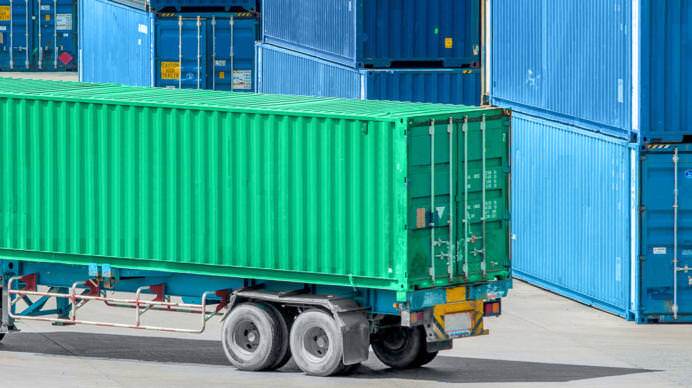
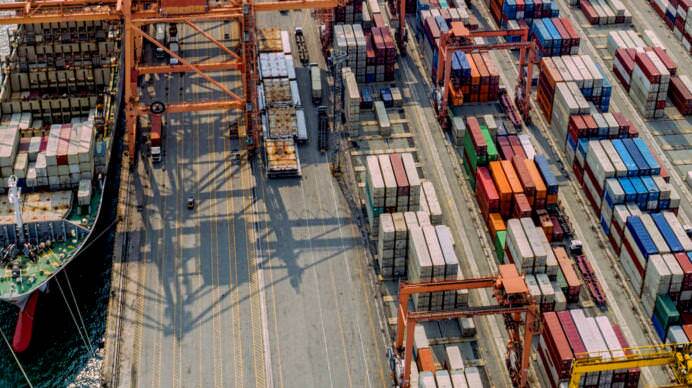
Wholesale orders can be expected to cost more and have longer delivery lead times. Expect to get more familiar with carriers who can support the shipping methods you’ll need to meet your B2B business needs. Bulk orders may need to be moved by sea freight or air freight, and international trade barriers like taxes, tariffs, and subsidies.
Common Fulfillment Services for Shipping to Retailers
If you choose to have your B2B orders fulfilled by a 3PL they should focus on providing fast and reliable delivery. Your should expect your 3PL to provide fulfillment solutions that help optimize your operations, bonus points for cost-cutting and increased efficiency.
Your fulfillment provider will also play a crucial role in the ability to meet orders on time. Delays and mismanagement on the part of a 3PL can harm the reputation of the company they represent, as well as incur penalty fees and refund losses that they might have to provide. A reliable 3PL will help improve your business’ profitability and scalability.

Is your 3PL not meeting SLAs?
Our dedicated account managers can help optimize your inventory management and track delivery performance, so you can work on growing your business.

B2C Order Fulfillment Defined
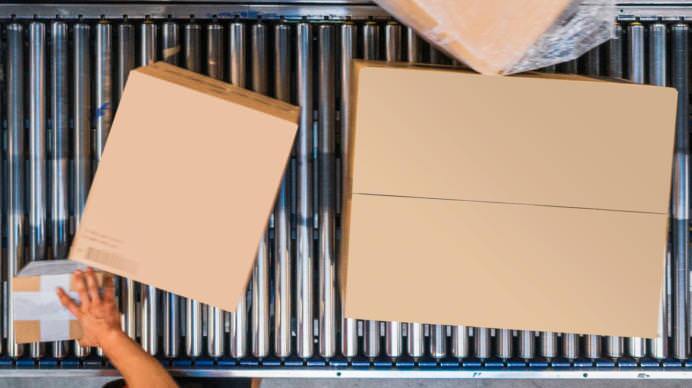
As the acronym indicates, B2C orders will go directly to the individual consumers. B2C generally has a lower average order value than B2B does, and the process of order fulfillment for B2C is also often simpler since there aren’t as many regulations and specific requirements to follow when fulfilling single orders.
B2C typically has set pricing and will display the same price for all customers, excluding seasonal or promotional activities that might occur. B2C payment processing is also more streamlined, typically because online checkout process has been made easy for payment transactions.
With B2C customers you are generally fulfilling one-off purchases from individual end users. This type of order fulfillment has relatively low barrier of entry because customers are typically buying direct from your website, and at this point many people are very comfortable with online shopping.
If you work with a 3PL to outsource your B2C order fulfillment, their role is to ensure that all orders are delivered damage-free, on time, and with accurate documentation—some also handle returns and refunds. Partnering with a 3PL can bolster your company’s ability to deliver ordered products to customers faster—sometimes on the same day. Mismanagement, delays or errors on the part of a 3PL can lead to bad reviews for the manufacturer and additional costs in terms of refunds and returns.
How Does B2B Order Fulfillment Differ From B2C Order Fulfillment?
There are three stages that always occur in any order fulfillment flow:
- Pre-purchase
- Purchase
- Post-purchase
In each of these stages there are key differences in the way order fulfillment is carried out for B2B orders versus B2C orders.
Pre-Purchase
Product price:
B2B orders are priced based on the needs and requirements of the receiving business, this can vary greatly depending on the size of an order, recurring orders, payment terms, and duration of the contracted relationship. Often times, brands selling to retailers establish a set wholesale price which is 30% to 50% of the retail price since the retailers are buying in bulk and marketing the product through their own channels.
With B2C on the other hand, orders are more straightforward; the price per unit is set by the product company and that price rarely varies.
Revenue per customer
B2B shipments mostly involve large-scale, bulk orders (which may be raw materials, parts, or assembled products) while B2C order fulfillment handles individual items like personal electronics or beauty products. Because of this, B2B orders can be in the millions of dollars and be recurring, while B2C orders are usually in the tens or hundreds and are usually a one-off purchase.
Sales Assistance
There is often an account manager or sales coordinator who helps facilitate the B2B exchange of goods. This lends itself to having more service and support around B2B order fulfillment, there are just more people ushering this interaction.
In B2C there is usually little or no sales assistance necessary since orders are often placed by the end consumer, directly through an ecommerce platform.
Purchase
Buying/Sales Process
The sales process for B2B often takes longer as it involves requests for quotes, department approval, negotiation, and more. Most retailers have a team of “buyers” who are responsible for identifying products they feel will drive revenue and margin for their company, negotiating bulk discounts from the seller, and managing the ongoing relationship with the seller.
For B2C, individual customers can shop around at a few places if they like, or just buy whatever they want the first place they see it.
Order Size
B2B shipments are generally large-scale volume, but purchased in fewer orders. The products will be sold individually through the retailer’s store front or online store, so the retailer will order more only when they need to restock their own fulfillment center inventory.
B2C purchases are much smaller orders, and are often handled in real-time as a single transaction.
Payments
B2B payments usually occur over an agreed upon period of time using traditional payment methods such as credit, purchase orders or CODs (cash on delivery).
For B2C, they are paid immediately at the time of purchase via credit card, check or cash.
Post-Purchase
Order fulfillment and shipping
Since B2B transactions involve larger order volumes, the shipping processes take longer, cost more, and require sophisticated management systems to track inventory levels and handling equipment for loading and unloading pallets of products.
Most big box retailers, like Walmart and Target, have very specific requirements with when and how they receive their product, that are detailed in a routing guide. Deviating from this routing guide can lead to retailer penalties that can be in the form of chargebacks, smaller future buys, and severing the relationship. It’s critical that the seller or 3PL they have partnered with to ensure they understand and abide by the contracted requirements.
In contrast, B2C order fulfillment offers low-cost (because parcels are light, or sometimes free shipping can be included), and order fulfillment times are often much faster.
Customer Relations
Personal relationships are essential to form with retailers who are selling your products. Most B2B contracts involve large, recurring shipments and close partnerships which are negotiated over extended periods of time, and require constant follow up and monitoring.
Those good personal relationships aren’t to be confused with the type of customer satisfaction that is required to cultivate for B2C orders. Customer satisfaction is front-loaded, with marketing, customer service, clear product displays and information, plus on-time delivery and accurate order fulfillment that enhance the customer experience.
Returns
All businesses must have a system in place for the return and exchange of products, regardless if it is B2B or B2C. Tracking returns through your supply chain is nuanced and requires detailed systems to do it accurately.
B2C transactions usually involve clear return and refund policies that are possible in the more transparent retail market. The reverse logistics process gets more complicated in B2B orders due to the larger order size, contract type and obligations that are negotiated.
B2B EDI
B2B EDI is simply the use of electronic data interchange for the purposes of exchanging documents between trading companies.
Using B2B EDI, a vendor might send exchange purchase orders and invoices with its customers in place of paper methods. B2B EDI has been in use in some form or other for a number of decades and has made the exchange of transaction information significantly faster and more efficient in a number of industries.
Small and large organizations alike can benefit from improved efficiency, reduced costs and greater throughput, by using an EDI system.
FAQ: The Difference Between B2B and B2C Fulfillment
Q: What is the difference between B2B and B2C order fulfillment?
A: B2B (business-to-business) fulfillment involves shipping large-volume bulk orders to retailers or businesses, with complex compliance requirements, longer lead times, freight-level shipping, and EDI-based order management. B2C (business-to-consumer) fulfillment ships individual orders directly to end customers, with simpler per-unit picking and packing, faster turnaround times, and lower average order values. The operational requirements, carrier types, pricing structures, and customer relationship dynamics are fundamentally different between the two.
Q: How does pricing work differently for B2B vs. B2C orders?
A: B2B pricing is negotiated based on order size, payment terms, relationship duration, and contract structure — wholesale prices are typically 30–50% of retail price since retailers buy in bulk and handle their own marketing and sales. B2C pricing is straightforward: a set retail price displayed to all customers, varying only for seasonal promotions. B2B orders can reach millions of dollars and recur on contract cycles, while B2C orders are typically individual transactions in the tens to hundreds of dollars.
Q: What compliance requirements make B2B fulfillment more complex than B2C?
A: B2B orders — particularly retail fulfillment — come with strict compliance requirements detailed in each retailer’s routing guide: specific pallet configurations, labeling standards, barcode requirements, EDI document exchange (purchase orders, invoices, ASNs), delivery time windows, and dock procedures. Deviating from these requirements triggers chargebacks, smaller future buys, or termination of the retail relationship. B2C fulfillment has far fewer compliance requirements — the primary standard is accurate, on-time delivery to the individual consumer.
Q: How do returns work differently in B2B vs. B2C fulfillment?
A: B2C returns are relatively straightforward — clear return policies, individual parcel returns, and standardized refund processes that most consumers expect. B2B returns are significantly more complex due to larger order sizes, contractual obligations, and the logistics of moving bulk freight back through the supply chain. The terms for B2B returns are typically negotiated as part of the original contract and vary by retailer, making reverse logistics for B2B a specialized capability that not all 3PLs handle well.
Q: Can a single 3PL handle both B2B and B2C fulfillment simultaneously?
A: Yes — and for brands selling through multiple channels, this is strongly preferred. A 3PL with genuine omnichannel capabilities manages both B2C (individual DTC orders) and B2B (retail bulk shipments) from the same shared inventory pool, using a WMS that routes each order through the correct fulfillment workflow automatically. The 3PL handles retailer-specific routing guide compliance, EDI connections, and freight coordination for B2B, while simultaneously processing same-day DTC shipments for B2C — without requiring separate inventory or separate fulfillment operations for each channel.
How DCL Handles Both B2B and B2C From One Inventory Pool
DCL is built for brands that need to fulfill both B2C and B2B orders simultaneously — without managing separate inventory pools or separate 3PLs. DCL’s eFactory WMS routes B2C orders (individual DTC shipments, same-day processing) and B2B orders (retail pallet builds, routing guide compliance, EDI coordination) from the same shared inventory automatically. DCL has established EDI connections with major retailers and deep experience with retailer-specific compliance requirements — the routing guide expertise that prevents chargebacks and protects retail relationships. For brands scaling from DTC into retail, DCL handles the operational complexity of both channels without requiring a separate fulfillment setup. Learn about DCL’s B2B and B2C fulfillment capabilities →
Bottom Line
Depending on the type of business you run, you may have to deal with B2B order fulfillment, B2C order fulfillment, and likely both. Navigating the differences between each can be challenging, but hopefully now that you are more familiar with the terminology and concepts that make each one unique you are better equipped to make the right decisions for your brand.
If you’re looking for a 3PL with fulfillment centers in cities across the US, we own and operate facilities in The Bay Area, Los Angeles, and Kentucky. Use DCL’s national footprint of warehouses to distribute your inventory across the country to reduce transit times and save on shipping costs. If you need fulfillment or shipping support and want to partner with DCL Logistics, we’d love to hear from you.
Tags: B2B, DTC, Omnichannel Fulfillment