



Outsourcing order fulfillment means handing picking, packing, shipping, and returns to a third-party logistics provider so your team can focus on growth rather than operations. This guide covers when outsourcing makes sense, how to evaluate a 3PL, and what the cost trade-offs actually look like.
Estimated reading time: 9 minutes
Who This Guide Is For: Growth-stage brands shipping 2,000+ DTC orders per month weighing whether to transition to a third-party logistics provider, and brands already running DTC and retail who need a single fulfillment partner for both.
What Is Outsourcing Order Fulfillment?
Outsourcing order fulfillment means contracting a third-party logistics provider (3PL) to receive, store, pick, pack, ship, and manage returns for your products — using the provider’s own facilities, staff, and technology instead of your own. The brand retains ownership of inventory and control over the customer experience; the 3PL handles the physical and operational execution.
The scope of what gets outsourced varies by brand. Some companies hand off the full fulfillment cycle from inbound receiving through returns processing. Others outsource specific functions — warehousing and shipping but not kitting, for example — and expand the relationship as volume grows. The order fulfillment process itself stays the same; what changes is who executes it.
Outsourcing is distinct from dropshipping, where a supplier ships directly to the end customer without the brand ever holding inventory. With a 3PL, the brand ships inventory to the provider’s fulfillment centers, and the 3PL fulfills orders from that stock on the brand’s behalf.
In-House vs. 3PL Fulfillment
The decision to outsource comes down to a straightforward trade: operational control and fixed cost structure (in-house) against scalability, shipping economics, and expertise (3PL). The table below maps the key differences across the dimensions that matter most for growth-stage brands.
| Factor | In-House Fulfillment | 3PL Fulfillment |
|---|---|---|
| Upfront cost | High — lease, equipment, staffing, WMS software | Low — onboarding fees and inventory transfer only |
| Cost structure | Fixed — costs remain even when volume drops | Variable — scales with order volume |
| Shipping rates | Retail or small-business carrier rates | Negotiated carrier rates passed to the brand; carrier optimization can reduce shipping costs by 10–15% |
| Scalability | Constrained by lease terms, headcount, and square footage | Expands and contracts with demand; peak season handled without additional hiring |
| Technology | Brand purchases and maintains its own WMS and integrations | 3PL provides platform; brand accesses real-time inventory and order data through a client portal |
| Geographic reach | Limited to single or few locations without significant investment | Multi-facility network reduces shipping zones and transit times |
| Expertise | Brand builds fulfillment knowledge internally | 3PL brings carrier relationships, compliance knowledge, and operational depth |
| Best for | Brands with highly customized packaging needs, very low order volume, or fulfillment as a core brand differentiator | Growth-stage brands shipping 2,000+ orders/month across multiple channels who need to scale without building fulfillment infrastructure |
The in-house model makes sense when fulfillment is genuinely central to the brand experience and the volume doesn’t justify the variable cost model a 3PL uses. For most growth-stage brands, the calculus shifts well before that point — fixed overhead and constrained shipping rates become a drag on unit economics as volume climbs.
Signs It’s Time to Outsource
There is rarely a single trigger — the decision to outsource usually builds from several operational constraints converging at once. These six signals are the most reliable indicators that in-house fulfillment has become a constraint on growth rather than a manageable cost center.
- Fulfillment errors are increasing as volume grows. When picking, packing, or shipping mistakes climb alongside order volume, it signals that the current operation has hit its quality ceiling. Manual processes don’t scale accurately. A 3PL running dedicated ecommerce fulfillment operations — with barcode scanning, system-driven pick paths, and QC checkpoints — maintains order accuracy above 99.8% regardless of volume spikes.
- You can’t offer the delivery speeds customers expect. Shipping from a single location means every order travels across whatever number of zones stand between your warehouse and the customer. If competitors are delivering in two days and your average transit is four, you’re losing customers to the gap. A 3PL with a multi-facility footprint allows strategic inventory placement that shrinks average shipping zone count and brings transit times down without paying for air freight.
- Shipping costs are eating margin you can’t recover. Brands self-fulfilling at low or mid-volume pay retail or small-business carrier rates. A 3PL ships at negotiated volume rates across all its clients and passes those savings through. The difference is typically 10–15% per shipment — meaningful margin recovery at scale, and a number that compounds as order volume grows.
- Your team is spending more time on fulfillment operations than on the business. When founders or operations leads are regularly pulled into pick-and-pack problems, carrier disputes, or inventory reconciliation, every hour spent there is an hour not spent on product, sales, or brand. The right inflection point is when fulfillment management is displacing work that directly drives revenue. A 3PL vs. self-fulfillment comparison can help quantify where that line sits for your operation.
- You’re running multiple channels and losing visibility between them. Brands selling DTC, retail, and through Amazon simultaneously need inventory and order data consolidated across all channels. Managing that with separate systems — or worse, spreadsheets — creates oversell risk, stockout exposure, and accounting complexity. A 3PL with integrated OMS and EDI capability provides a single view of inventory position and order status across every channel.
- You’re holding inventory you can’t move because returns aren’t processed fast enough. Returns that sit unprocessed for days or weeks lock up capital and inventory that could be resold. If your returns process is manual and slow, a 3PL with a 48-hour standard disposition window restores that inventory to sellable status faster — and the operational overhead of processing returns doesn’t fall on your internal team. See how DCL’s reverse logistics operation handles disposition at scale.
What to Look for in a Fulfillment Partner
Selecting a 3PL is a long-term operational decision, not a vendor procurement exercise. The criteria below separate providers that can support sustained growth from those that perform adequately at lower volumes but create constraints later.
Proven accuracy and on-time performance, with published benchmarks. Any 3PL can claim high accuracy. Ask for specific numbers — order accuracy rate, on-time shipping rate, returns disposition time — and ask how they’re measured. Providers who don’t publish benchmarks typically don’t want them compared. A well-run operation should maintain order accuracy above 99.8% and on-time shipping above 98.5% consistently, not just during slow periods.
Technology that gives you live visibility without relying on the 3PL to pull reports. A client portal that shows real-time inventory counts, order status by channel, and shipment tracking across all facilities is standard for a modern 3PL. If accessing your own data requires submitting a request and waiting for a response, that’s a system design problem that compounds at scale. Look for a platform that connects your ecommerce fulfillment channels, EDI connections, and carrier tracking in one view.
Multi-facility footprint positioned for your customer base. Where a 3PL’s warehouses are located matters as much as how many there are. A network that covers both coasts and central regions allows distributed inventory placement that reduces average shipping zones. Ask for two-day ground coverage data — a well-positioned network should reach 96% or more of the US population via ground shipping.
Channel flexibility — DTC, retail, and Amazon from the same operation. Brands running omnichannel fulfillment need a 3PL with proven EDI capability for retail compliance, Amazon Seller Central and Vendor Central integrations, and DTC shipping operations — all managed from a single inventory pool. Providers that specialize only in DTC will create friction the moment retail or Amazon volume becomes meaningful. Review the differences between B2C and B2B fulfillment to understand the operational requirements of each.
Value-added services under the same roof. Kitting, assembly, rework, and custom packaging requirements often emerge as a brand scales. A 3PL with dedicated kitting and assembly teams — not just general warehouse labor reassigned to kitting — handles those requirements without quality degradation or separate vendor management. Confirm specifically that kitting capacity is staffed separately from standard pick-and-pack operations. For the full scope of what falls under this category, see the value-added services guide.
Dedicated account management, not a shared support queue. The operational relationship with a 3PL is ongoing. When a carrier issue, inventory discrepancy, or new channel requirement comes up, response time matters. A dedicated account manager who knows your catalog, your channels, and your volume patterns resolves issues faster than a ticket-based support model. Ask during 3PL evaluation how account management is structured and what the escalation path looks like. The 3PL questionnaire is a useful starting framework for this conversation.
How Outsourcing Affects Fulfillment Costs
The cost model for a 3PL is variable by design: brands pay for storage, handling, and shipping based on actual volume rather than carrying fixed overhead year-round. That structure benefits brands with seasonal demand, rapid growth, or SKU proliferation — categories where fixed costs become increasingly punishing.
The primary cost components in a 3PL relationship are receiving fees (charged per unit or pallet on inbound), storage fees (charged monthly per pallet or cubic foot), pick-and-pack fees (per order or per item), shipping costs (carrier rates plus any fuel surcharges), and fees for value-added services like kitting and assembly. These components interact — higher storage costs can sometimes be offset by lower pick-and-pack fees depending on how a provider structures their pricing. The table below shows general ranges for each category; actual figures vary by provider, product type, and volume. A full breakdown of how each fee category is structured and what drives it is covered in the 3PL costs guide.
| Cost Category | How It’s Charged | Typical Range | What Drives Cost Up |
|---|---|---|---|
| Receiving | Per pallet or per unit on inbound | $5–$15 per pallet; $0.20–$0.50 per unit | Non-standard packaging, unlabeled units, large inbound volumes requiring manual counting |
| Storage | Per pallet or cubic foot, monthly | $20–$40 per pallet/month; $0.40–$0.80 per cubic foot/month | Slow-moving SKUs, peak season surcharges, oversized or hazmat product requirements |
| Pick and pack | Per order or per item picked | $2–$3 per order (first item); $0.25–$0.75 per additional item | High SKU count, fragile items requiring special handling, multi-item kits, custom packaging inserts |
| Shipping | Per shipment (carrier rate plus surcharges) | Varies widely by zone, weight, and service level; 3PL rates typically 10–15% below retail | Dimensional weight penalties, delivery area surcharges, residential delivery, expedited service |
| Returns processing | Per return unit received and processed | $2–$6 per return, depending on inspection and disposition requirements | Detailed inspection requirements, repackaging, restocking complexity, high return rates |
| Value-added services | Per unit or per hour depending on complexity | $0.50–$3.00 per unit for kitting; hourly rates for custom assembly projects | Kit complexity, component count, special materials, low-volume runs requiring dedicated setup time |
The most significant ongoing cost lever a 3PL provides is shipping rate access. Carrier rates are volume-negotiated, and a 3PL shipping millions of packages annually negotiates at a scale no individual brand can match. DCL’s SelectShip carrier optimization engine shops rates at dispatch across parcel and freight carriers using origin, weight, and channel service requirements — delivering 10–15% savings against what brands would pay managing carrier relationships independently. Over hundreds of thousands of annual shipments, that difference is material to unit economics.
The secondary lever is the elimination of fixed overhead. Warehouse lease, equipment amortization, WMS licensing, and fulfillment headcount are replaced by a variable cost that tracks actual volume. For brands with seasonal peaks, that shift eliminates the problem of carrying infrastructure built for peak capacity through slow months. For the service level agreement structure that governs how costs and performance standards are formalized, review what SLA terms to negotiate before signing.
There are also one-time transition costs to account for separately from the ongoing cost model. Onboarding fees, inventory transfer freight, integration setup, and any initial labeling or packaging changes to meet the 3PL’s inbound requirements are front-loaded expenses that don’t recur. In practice, these are typically recovered within the first two to four months through shipping rate savings alone — particularly for brands that were previously paying small-business carrier rates without negotiated volume discounts. Building that payback timeline into your decision model before signing is worth doing; the 3PL onboarding guide covers what to expect at each stage of the transition and what costs are associated with each milestone.
Why DCL Is Built for Outsourcing Fulfillment
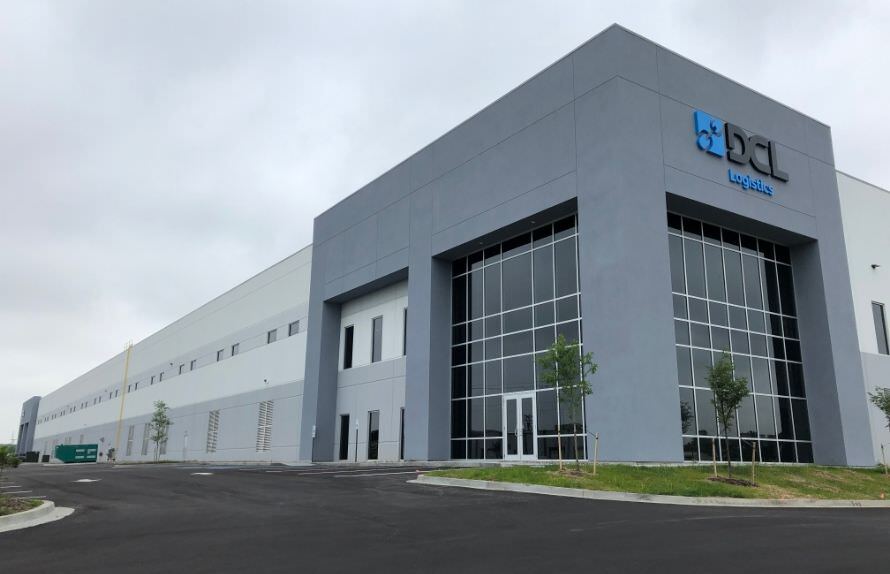
DCL Logistics has operated as a 3PL since 1982, with seven US facilities totaling more than 680,000 square feet and a network that reaches 96%+ of the US population on two-day ground. eFactory, DCL’s proprietary platform combining OMS, TMS, EDI, and client portal, gives brands live inventory counts, order status by channel, and shipment tracking across all facilities from one screen. SelectShip, DCL’s carrier optimization engine, delivers 10–15% shipping cost savings at dispatch; DCL holds order accuracy above 99.8%, on-time shipping above 98.5%, and returns disposition at 48 hours.
Talk to DCL about outsourcing fulfillment →
FAQ
► What is the minimum order volume needed to work with a 3PL?
Most established 3PLs operate most efficiently with brands shipping at least 2,000 DTC orders per month, though this varies by provider and product type. Below that threshold, the per-order economics of a 3PL relationship may not outweigh the cost savings you’d see versus self-fulfillment. The more relevant question is whether your current volume is growing — if you’re approaching that threshold, starting the 3PL evaluation process early gives you time to transition before fulfillment becomes a constraint on growth.
► How long does it take to transition from in-house fulfillment to a 3PL?
A standard onboarding typically runs four to eight weeks from signed agreement to first shipment, depending on catalog complexity, the number of integrations required, and how quickly inventory can be transferred. The main milestones are systems integration (connecting your ecommerce platform, ERP, or OMS to the 3PL’s platform), inbound inventory transfer and receiving, and carrier account configuration. Brands with complex catalogs — many SKUs, kitting requirements, or multiple sales channels — should plan for the longer end of that range.
► What happens to my existing inventory when I switch to a 3PL?
Your inventory ships to the 3PL’s fulfillment center or centers via standard inbound freight. The 3PL receives and counts it on arrival, reconciles against your advance shipment notice (ASN), and makes it available in their system for order fulfillment. Most 3PLs can also coordinate inbound shipments directly from your manufacturer or supplier, so inventory flows straight to the fulfillment network without routing through your location first. If you’re currently self-fulfilling and have inventory in your own space, the transition plan typically staggers inbound and outbound — you continue to fulfill existing orders while inventory transfers to avoid a gap in service.
► How do I evaluate whether a 3PL’s SLA terms are actually competitive?
Start with the specific metrics — order accuracy rate, on-time shipping rate, and returns disposition time — and ask how each is measured and reported. Order accuracy above 99.8% and on-time shipping above 98.5% are benchmarks a well-run 3PL should meet consistently, not just during low-volume periods. Then review what the SLA covers when performance falls short: what constitutes a miss, how it’s documented, and what remediation looks like. Vague SLA language that doesn’t define measurement methodology is a warning sign. The service level agreement guide covers the terms to negotiate and what to watch for in standard contract language.
► Can a single 3PL handle both DTC and retail fulfillment?
Yes, provided the 3PL has genuine EDI capability and retail compliance experience — not just DTC operations with a retail add-on. Retail fulfillment requires vendor compliance label formatting, routing guide adherence, ASN transmission, and retailer-specific packaging requirements that vary by account. A 3PL managing both DTC and retail from a shared inventory pool gives you unified stock visibility and eliminates the need to split inventory between fulfillment partners. Confirm specifically that the 3PL has active EDI connections to the retailers you sell through and that compliance failures are tracked and reported.
Author Bio: Hadleigh Reid is the Content Manager at DCL. A seasoned SEO/AEO strategist with expertise in writing and data management, he has written 400+ posts touching every area of the logistics industry. He works interdepartmentally with sales and marketing, helping facilitate strong partnerships with leading ecommerce companies