



ShipStation helps ecommerce brands manage shipping across multiple sales channels from one interface. When a brand outsources fulfillment to a 3PL, the physical shipping work moves to the warehouse, which changes what ShipStation does in the operation. This guide explains how that handoff works and what sellers should evaluate before connecting.
9-minute read
A ShipStation 3PL integration defines how order data, shipping decisions, and tracking information move between ShipStation and a third-party logistics provider’s fulfillment systems. The integration determines which platform controls carrier selection, which system holds accurate inventory counts, and how tracking data returns to the customer.
For brands that built their shipping workflow around ShipStation, outsourcing fulfillment raises a specific architectural question: does ShipStation remain in the stack, or does the 3PL’s system take over? The answer depends on channel count, order volume, and how much of the shipping decision the brand wants to control versus delegate.
Who This guide is For: Ecommerce brands currently using ShipStation that are evaluating a 3PL, especially those managing multiple sales channels and approaching the limits of in-house fulfillment.
Contents
- ShipStation’s Role in Ecommerce Shipping
- When Brands Using ShipStation Need a 3PL
- How ShipStation Fits Alongside a 3PL
- How the Integration Works
- What to Confirm Before Connecting
- Why DCL Is Built for ShipStation 3PL Integration
- Frequently Asked Questions
ShipStation’s Role in Ecommerce Shipping
ShipStation aggregates orders from multiple sales channels into one interface where sellers can compare carrier rates, generate shipping labels, and push tracking information back to each storefront. It connects to platforms like Shopify, Amazon, eBay, Walmart, and others so a brand can manage shipping from a single screen rather than logging into each channel separately.
ShipStation handles the shipping decision layer of ecommerce. It does not manage warehouse operations, physical inventory counts, receiving, storage, pick and pack execution, or returns processing. A seller still needs a place to store products, people or systems to prepare orders, and a process for getting packages to carriers.
At low volume, a brand can run ShipStation from a back room, garage, or small warehouse and handle the physical work internally. ShipStation makes the shipping step efficient, but it assumes someone else is doing the warehouse work upstream.
When Brands Using ShipStation Need a 3PL
ShipStation-based workflows tend to strain when order volume, channel count, or SKU complexity outgrows the brand’s available space and labor. Warning signs include orders shipping late during peak periods, packing errors increasing with volume, inventory counts drifting from actual stock, and the team spending more time on fulfillment than on product development or marketing.
Channel expansion often accelerates the problem. A brand selling through Shopify, Amazon, and a wholesale account needs to fulfill different order types with different packaging, labeling, and service-level requirements. ShipStation can aggregate those orders, but it cannot execute the physical work or maintain accurate inventory across channels without a warehouse system behind it.
The decision to outsource fulfillment also changes what ShipStation does in the workflow. When a 3PL handles picking, packing, and shipping, the provider’s warehouse management system becomes the operational backbone. ShipStation may still play a role, but its function shifts from the center of the shipping operation to one piece of a larger system.
How ShipStation Fits Alongside a 3PL
The central architectural question is whether ShipStation sits between the sales channels and the 3PL, or whether the 3PL connects to each channel directly. Both models work, but they produce different outcomes for carrier selection, inventory visibility, and operational control.
In the first model, ShipStation remains the order aggregator. It pulls orders from all channels and passes them to the 3PL for fulfillment. This can simplify the initial setup if the brand already has ShipStation connected to every channel. The tradeoff is that ShipStation becomes a dependency in the order flow, and inventory visibility is limited to what ShipStation can reflect from the warehouse.
In the second model, the 3PL connects directly to each sales channel through its own integrations or an ERP like NetSuite. This removes ShipStation from the critical path and gives the provider’s systems full control over order ingestion, inventory updates, and carrier selection. The tradeoff is that the brand may need to reconfigure channel connections during onboarding.
The table below shows how responsibilities typically shift between the two models.
| Function | ShipStation as Aggregator | 3PL Direct Connection |
|---|---|---|
| Order ingestion | ShipStation pulls from channels, passes to 3PL | 3PL receives directly from each channel |
| Carrier selection | Split: ShipStation may select, or defers to 3PL | 3PL selects at dispatch |
| Label generation | ShipStation or 3PL, depending on setup | 3PL generates at warehouse |
| Inventory source of truth | 3PL’s WMS (ShipStation has limited inventory) | 3PL’s WMS |
| Tracking updates to channels | ShipStation pushes tracking to storefronts | 3PL pushes tracking directly or via ERP |
| Channel configuration | Existing ShipStation connections stay | Channels reconnect to 3PL’s systems |
Neither model is universally better. The right choice depends on how many channels the brand operates, whether the 3PL has native integrations for each one, and how important carrier optimization is to the brand’s shipping cost structure.
How the Integration Works
Regardless of which model the brand chooses, the integration needs to handle three operational stages: getting orders to the warehouse, maintaining accurate inventory, and returning tracking data to the customer.
Order Routing
Orders need to reach the 3PL’s fulfillment system with enough detail for the warehouse to execute. That means items, quantities, shipping method, destination, and any special handling or kitting instructions. Whether those orders come through ShipStation or directly from each channel, the provider’s system needs a clean, consistent feed.
Sellers should define transmission timing. Some brands send orders to the 3PL immediately, while others hold them for fraud review or allow a cancellation window. The integration should also handle edits and cancellations applied after the initial transfer, along with rules for how partially fulfillable orders are treated.
If ShipStation remains in the order path, the brand should test whether the handoff introduces latency. An extra step between the sales channel and the warehouse adds a potential point of failure. The implementation plan should define who monitors for stuck or failed orders and how quickly they are resolved.
Inventory Visibility
ShipStation was not designed as an inventory management system. It can display inventory counts, but it does not manage perpetual inventory, run cycle counts, or reconcile physical stock against system records. When a 3PL is involved, the provider’s warehouse management system becomes the source of truth for what is physically on the shelf.
The integration should route inventory updates from the 3PL’s system to the sales channels, either directly or through an ERP. Relying on ShipStation as the inventory intermediary creates risk because it adds a sync step without adding accuracy. If the 3PL adjusts stock for damage, shrinkage, or returns, that adjustment needs to reach the selling channels before another order oversells the position.
Brands selling the same SKU across multiple channels need to confirm that the integration supports a shared inventory pool. Most 3PLs still struggle with omnichannel inventory, and adding ShipStation as a middle layer does not solve the underlying problem if the warehouse system cannot allocate and report across channels in real time.
Shipping and Tracking
Carrier selection is the highest-stakes decision in this integration. When ShipStation generates labels, the brand controls the carrier and service level for each shipment. When the 3PL generates labels, the provider’s system makes that decision at dispatch using its own carrier accounts and optimization logic.
For most outsourced fulfillment models, the 3PL generating labels is the stronger option. The provider can apply volume-based rates, optimize across shipping zones from multiple fulfillment locations, and factor in dimensional weight at the point where the package is physically measured. ShipStation selecting a carrier before the warehouse touches the order means the shipping decision is made without final package data.
Tracking information should flow from the 3PL back to each sales channel so customers see accurate shipment status. If ShipStation is still in the stack, tracking can route through it to the storefronts. If the 3PL connects to channels directly, tracking posts without the extra hop. Either way, the brand should test that tracking appears correctly on every channel within the expected timeframe.
What to Confirm Before Connecting
Before launching a ShipStation 3PL integration, brands should resolve the architectural question first: is ShipStation staying in the order path, or is the 3PL connecting to channels directly? This decision shapes every subsequent configuration choice.
Sellers should then confirm how each of the following is handled: order transmission timing and format, carrier selection ownership, label generation, inventory sync direction and frequency, returns initiation and disposition, tracking flow back to channels, and exception handling for failed syncs or stuck orders.
Testing should go beyond a single standard order. Include multi-SKU orders, different shipping services, orders with value-added services, cancellations after transfer, inventory adjustments, and returns. Each test should confirm that ShipStation (if still in the stack), the 3PL’s system, and the sales channels all reflect the correct state.
The onboarding plan should assign named owners for monitoring during the initial production period. Both teams should review order flow, inventory balances, tracking accuracy, and exception logs daily until the integration runs cleanly at volume.
Why DCL Is Built for ShipStation 3PL Integration
DCL Logistics connects to ShipStation and supports the direct channel integrations that let brands choose the architecture that fits their operation. The eFactory platform, DCL’s proprietary system combining OMS, TMS, EDI, and client portal, gives clients live inventory counts, order status by channel, and shipment tracking across all facilities from one screen.
SelectShip, DCL’s dynamic carrier and service optimization engine, evaluates origin, weight, and channel service requirements at dispatch across both parcel and retail/B2B shipping. DCL Logistics reports order accuracy above 99.8%, on-time shipping above 98.5%, inventory accuracy above 99.5% on monthly cycle counts, and shipping cost savings of 10–15% compared with independent carrier management.
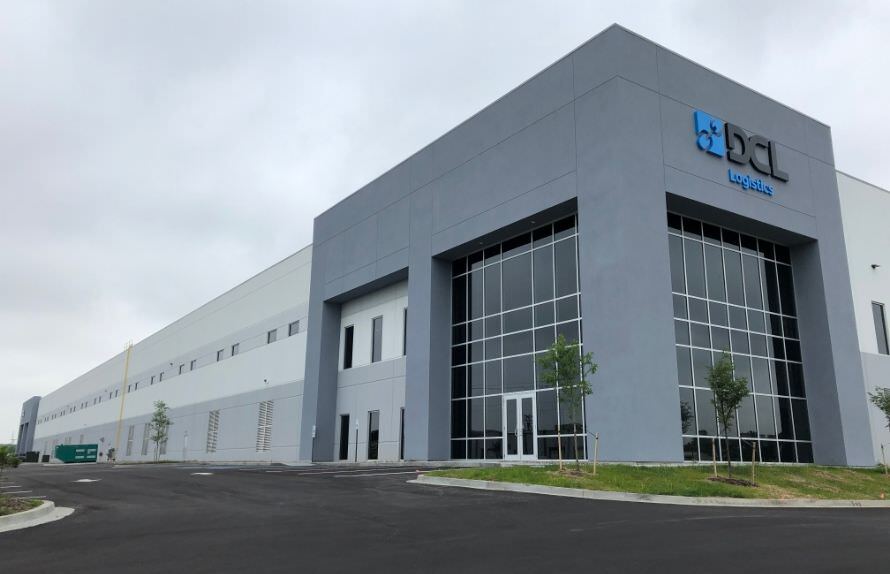
DCL’s facility network covers the United States from locations in Fremont CA, Ontario CA and Perris CA, Louisville KY (adjacent to UPS Worldport), and York PA.
Talk to DCL about ShipStation 3PL integration →