


Table of Contents
Ecommerce returns were long treated as a cost to be minimized rather than a process worth optimizing. The prevailing logic was straightforward: every returned package represents a failed transaction, and the goal is to handle it as cheaply as possible.
That framing no longer holds up. Return rates in ecommerce run between 20 and 30 percent across most categories, and research consistently shows that return policy is a significant factor in purchase decisions. Reverse logistics has become a customer-facing function, not just a back-office cost center. How a brand handles the return shapes whether a customer comes back.
The operational side of this challenge falls heavily on third-party logistics providers. For most DTC brands, the 3PL is where returned goods land, get assessed, and either re-enter inventory or get written off. That process, and how well it is designed, determines both the customer experience and the financial outcome of every return.
Reverse logistics is no longer just a back-office cost—it’s a growth lever that affects retention, margin recovery, and customer trust. Fast, accurate returns processing and clear customer communication can reduce support burden, recover more inventory value, and turn returns data into insights that lower future return rates.
Why Returns Are a Revenue Problem, Not Just an Operations Problem
The cost of a return is visible and easy to measure: shipping, labor, restocking time. The revenue impact is less obvious but often larger. A customer who has a poor return experience is unlikely to purchase again. One who gets a fast, hassle-free refund or exchange frequently does.
Bracketing, the practice of ordering multiple sizes or variations with the intent to return what does not fit, is widespread in apparel and footwear. These are not low-value customers gaming the system. They are high-intent buyers working around the uncertainty of online shopping. The brands that make returning easy retain a larger share of them.
Margin recovery is the other half of the equation. An item inspected and restocked within a day or two retains most of its resale value. The same item sitting unprocessed in a returns pile for two weeks may miss its selling window, require deeper markdowns, or end up in liquidation. Processing speed is not just an operations metric. It has a direct line to gross margin.
The 3PL’s Central Role in Reverse Logistics
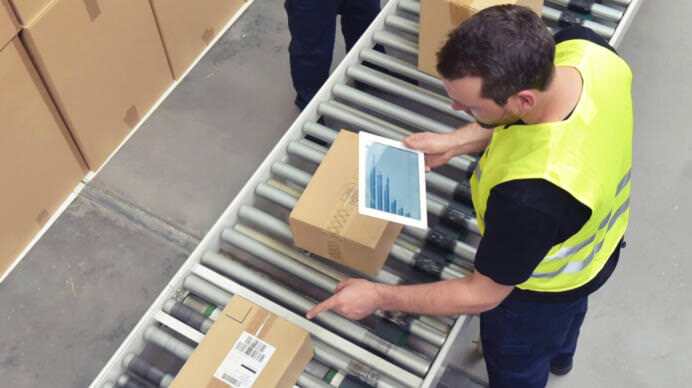
For most DTC brands, the 3PL handles every physical step of the returns process: receiving inbound shipments, inspecting and grading returned goods, restocking sellable inventory, and managing disposition for items that cannot be resold. How well a 3PL executes each of these steps has a direct effect on both customer satisfaction and inventory economics.
Many 3PLs were built primarily around outbound fulfillment and treat returns as secondary. The result is often slower processing times, inconsistent grading, and limited visibility for the brand. Providers that have invested in dedicated reverse logistics infrastructure, trained staff, and real-time system integrations tend to deliver meaningfully better outcomes across every relevant metric.
When evaluating or renegotiating a 3PL partnership, it is worth assessing capability across five specific dimensions:
- Receiving velocity How quickly are returned goods checked in after carrier delivery? Same or next business day is the standard to hold partners to.
- Grading and triage accuracy Are condition assessments based on defined, documented criteria, or are they left to individual judgment? Inconsistency here creates downstream problems with restocking and disposition decisions.
- Inventory reintegration speed How quickly do restockable items become available to sell again after inspection? Every day of delay is a day of lost revenue potential.
- Disposition management What happens to items that cannot be restocked? The range of options (refurbishment, secondary market, donation, recycling) and the brand’s visibility into outcomes both matter.
- Technology integration Can the 3PL’s warehouse management system push status updates to the brand’s returns platform in real time? Without this, proactive customer communication is not possible.
Geography also matters. A 3PL with a single returns facility creates longer transit times for customers in other regions, which delays refund processing and increases the window of customer uncertainty. Distributing returns intake across regional nodes, as many brands already do with outbound fulfillment, reduces that lag significantly.
Designing the Customer-Facing Returns Experience
The warehouse work is largely invisible to the customer. What they experience is the initiation flow, the communication they receive during transit, and the speed of their refund or exchange. Each of these is a touchpoint that either reinforces or undermines trust in the brand.
The Initiation Layer
Self-service return portals have largely replaced manual return initiation processes. A well-built portal does more than generate a label. It captures return reason data that feeds back to merchandising and product teams, presents exchange or store credit options before defaulting to a refund, and completes the process without requiring customer service involvement.
Offering store credit with a small incentive at the point of return initiation is a straightforward retention lever. Some customers who intended to request a cash refund will accept credit if the offer is framed well. The cost of the incentive is typically well below the cost of re-acquiring a lapsed customer.
Communication During the Return Window
The most common driver of returns-related customer service volume is simply not knowing what is happening. Customers want confirmation that their return was received and that their refund or exchange is being processed. Proactive notifications triggered by carrier scans and warehouse receipt events handle the majority of these inquiries before they become support tickets.
This communication loop depends entirely on data flowing correctly between the 3PL’s warehouse management system and the brand’s returns platform. When that integration is unreliable or operates on a delay, real-time communication is not possible and customer service volume rises. Many brands discover this is where their returns experience breaks down in practice, regardless of how well the front-end portal is designed.
The Margin Recovery Imperative
Returns that move through the process quickly and accurately recover more margin than those that do not. The math is straightforward: an item that returns to sellable inventory within 48 hours retains close to its full value. An item that takes two weeks to process may no longer fit the current selling window, requiring steeper discounts or liquidation.
Condition Grading and Disposition Pathways
Clear, documented grading criteria are the foundation of effective returns processing. Without them, condition assessments are inconsistent and disposition decisions are made ad hoc. With them, warehouse staff can quickly and reliably route each item: sellable inventory goes back into stock, lightly impaired items go to a markdown or secondary channel, and non-sellable items go to an appropriate disposition pathway.
The secondary market channel has become increasingly relevant for ecommerce brands. Platforms that facilitate peer-to-peer resale or branded resale programs allow merchants to recover value from items that would otherwise be liquidated or discarded. Building this into the disposition workflow, rather than treating it as an afterthought, makes a meaningful difference in recovery rates.
Using Returns Data to Reduce Future Returns
Return reason data, collected consistently and routed to the right teams, is one of the more underused signals in ecommerce. A SKU generating high volumes of size-related returns often points to a fit issue that can be addressed in the product description or sizing guide. A high rate of “not as pictured” returns points to a photography or copywriting problem.
Acting on this data reduces return rates over time, which lowers costs across the board. Brands that treat returns analytics as a feedback loop into product development and content creation see compounding benefits that go well beyond the returns function itself.
Reverse Logistics Optimization Checklist
Use this as a practical audit of your current returns program:
- Defined SKU-level grading criteria documented, shared with your 3PL, and updated seasonally
- Real-time WMS-to-OMS integration for prompt inventory reintegration on restockable returns
- Self-service returns portal with exchange and store credit options presented before refund default
- Proactive customer communication triggered by carrier scan and warehouse receipt events
- Documented disposition pathways for each condition grade (restock, markdown, secondary market, liquidate, donate)
- Return reason data captured consistently and shared with merchandising and product teams on a regular cadence
- SLA tracking for returns processing velocity, measured in hours rather than days
- Regional returns intake strategy to reduce transit time between customer and warehouse
- Clear contractual terms with your 3PL covering returns labor costs, grading accountability, and shrinkage
Building a Returns Program That Scales
The returns challenges at different revenue levels are not the same, but the underlying principles are consistent. The experience needs to be easy for the customer, the processing needs to be fast and accurate at the warehouse, and the data needs to flow to the teams that can act on it.
For growing brands, the critical inflection point is when manual or semi-manual processes start to create visible problems: slower processing times, inconsistent grading, mounting customer service contacts around return status. This is typically the right moment to revisit the 3PL relationship, assess whether current SLAs are appropriate for current volume, and evaluate whether the returns management platform in use has the integration depth and communication capabilities the program needs.
Returns management platforms like Loop, Narvar, and Happy Returns have matured significantly and offer meaningful workflow automation, analytics, and customer communication capabilities. The right choice depends on the brand’s existing tech stack, order volume, and the complexity of its return policies. What matters most is that the platform integrates reliably with the 3PL’s WMS, since that data connection underpins everything else.
Brands that treat reverse logistics as a strategic function, rather than an operational afterthought, tend to see better retention rates, lower customer service costs, and stronger margin recovery. In a market where acquisition costs remain high and customer loyalty is hard to build; the post-purchase experience is one of the more durable competitive advantages available.
FAQ
1. Why should ecommerce brands treat returns as a growth lever instead of just a cost center?
Returns are a major part of the customer experience, and a smooth process can improve retention, reduce support friction, and preserve margin. Brands that optimize returns are more likely to keep customers coming back and recover more value from returned inventory.
2. What role does a 3PL play in the returns process?
A 3PL typically receives returned items, inspects and grades them, restocks sellable goods, and manages disposition for items that cannot be resold. Its speed, accuracy, and system integration directly affect both customer satisfaction and inventory performance.
3. What makes a strong returns experience for customers?
A strong experience starts with a self-service return portal, clear exchange or credit options, and proactive communication throughout the return window. Customers also value fast refunds or exchanges and visibility into where their return stands.
4. How can brands recover more margin from returns?
Brands can recover more margin by processing returns quickly, using clear grading criteria, and routing items into the right disposition path without delay. Sellable products should re-enter inventory fast, while other items should move efficiently to markdown, resale, donation, or recycling channels.
5. How can return data help reduce future returns?
Return reason data can reveal recurring issues with fit, product descriptions, photography, or quality. When merchandising, product, and content teams act on that data, brands can lower return rates over time and improve the overall shopping experience.