




- Warehouse exceptions are inevitable. The goal isn’t to eliminate every exception, the best 3PLs understand how to identify, resolve, document, and learn from each excetion quickly.
- Automation should handle the standard flow while giving operators flexibility when an order, shipment, or inventory receipt doesn’t follow the script.
- The best 3PLs treat exceptions as data. Recurring discrepancies can reveal problems in receiving, inventory, packaging, transportation, or upstream processes.
- Quality systems such as CAPA, root cause analysis, documented work instructions, and traceability help prevent the same exception from happening repeatedly. Always ask to see your 3PLs documentation before signing up with a new partner!
- Proactive planning matters as much as reactive problem-solving. Peak season forecasting, dedicated operational ownership, and real-time visibility can prevent exceptions from becoming backlogs.
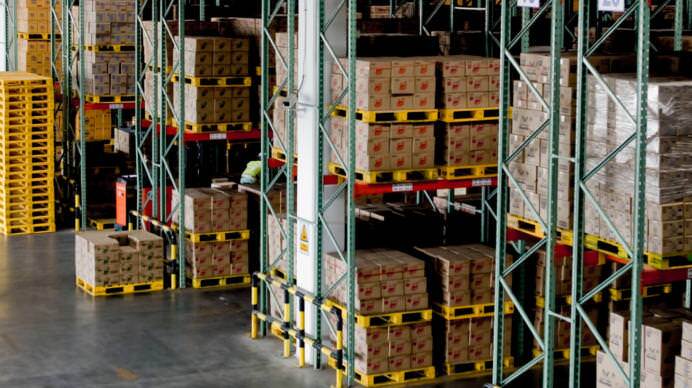
Warehouse operations are often thought of as a series of repeatable processes. It starts wih receiving inventory, putting it away, inventory storage management, picking and fulfilling an order, packaging it, and ensuring it gets shipped on time. For 80% of order, those tasks can all flow the same every time.
But anyone who has worked in operations knows it is the business of exceptions. There is always an anomaly to process, whether it’s a pallet arrives damaged, the advance shipping notice (ASN) doesn’t match what is actually on the truck, inventory arrives without the right labels, a shipment has an overage or shortage, the required paperwork is missing, or a retailer changes its routing requirements and a new process is needed all together.
In logistics, these aren’t unusual edge cases, they are the rule to build warehouse procedures around.
With more brands launching personalization, bundling, complex return policies, new sales channels, and retailer-specific requirements, exceptions are increasingly baked into the business. Most fulfillment strategies are built around the standard order, the orders that flow predictably through the system. Performance issues, however, often show up in the orders that don’t follow the script.
That’s why a modern 3PL will be aware of how much warehouse exception management your brand shouldn’t have to be asking “How do we make sure the same problem doesn’t happen again?” Your 3PL should solve for that before you even have to ask.
What Is Warehouse Exception Management?
Warehouse exception management is the process of identifying, investigating, resolving, documenting, and preventing issues that fall outside a warehouse’s standard operating workflow.
An exception can occur at virtually any point in the fulfillment lifecycle, including:
- Receiving
- Inventory management
- Picking and packing
- Order processing
- Shipping
- Returns
- Retail compliance
- Kitting and value-added services
- Data and system integrations
The important distinction is that exception management isn’t simply customer service or troubleshooting. A strong exception management process is warehouse quality processes that connects the immediate fix with the underlying operational cause.
For example, if a warehouse receives a pallet with the wrong quantity, the immediate action might be to quarantine the inventory, investigate the discrepancy, and notify the customer. But the better question is: Why did the discrepancy happen?
Solving the immediate issue protects today’s order, but understanding the cause helps protect tomorrow’s orders.
Common Warehouse Exceptions
Warehouse exceptions can take many forms, but several categories appear repeatedly across modern fulfillment operations.
Damaged Pallets or Product
Damage discovered during receiving can create downstream inventory and customer-service issues if it isn’t identified immediately.
A damaged pallet may need to be inspected, documented, quarantined, repacked, or returned to the supplier. The warehouse also needs a clear record of what inventory is usable and what inventory is not. The key is to prevent damaged or questionable inventory from being accidentally introduced into available inventory.
Incorrect ASNs
An ASN that doesn’t match the physical shipment can create receiving delays and inventory discrepancies. If the warehouse receives 950 units but the ASN says 1,000, the exception needs to be identified and reconciled rather than simply forcing the system to match the expected quantity.
Unlabeled Inventory
Missing, incorrect, or inconsistent labels can make otherwise usable inventory difficult to receive, put away, pick, or ship. A flexible warehouse should have documented processes for determining what can be relabeled or corrected, and what needs to be held until the discrepancy is resolved.
Short Shipments and Overages
Shortages and overages create more than a simple inventory-count problem. They can affect customer orders, purchase orders, inventory availability, financial reconciliation, and retailer or marketplace relationships.
For B2B fulfillment, the consequences can be even greater when shipments need to comply with retailer-specific routing guides, labeling, packing lists, or delivery requirements.
Missing Paperwork
Documentation requirements can vary by product, customer, retailer, and shipment. A missing document can stop an otherwise ready shipment from moving.
A strong exception process therefore needs clear escalation paths: identify the missing information, determine who owns the resolution, document the outcome, and prevent the shipment from moving incorrectly.
Why Warehouse Exceptions Can Become Expensive
An individual exception may look small, but at scale they become big problems that are costly to solve.
A receiving discrepancy can become an inventory discrepancy. The inventory discrepancy can create a short shipment. The short shipment can trigger a customer-service ticket. The customer may cancel the order. Operations may need to reship the product. And the original inventory problem may still be sitting unresolved.
The direct cost is only part of the problem. Overhead costs that will need to be absorbed include added labor or overtime, expedited shipping, reshipping costs, inventory write-offs, retail chargebacks or downgraded relationship, lost sales, lost customers, delayed launches or replenishment, and potentially more.
This is why exception management should be viewed as a business performance function, not simply a warehouse task.
The Best 3PL Exception Management Process
The strongest warehouse operations build a repeatable framework around exceptions.
1. Identify the Exception
The first step is visibility. Warehouse employees need systems and processes that make discrepancies obvious rather than relying on someone to notice a problem manually.
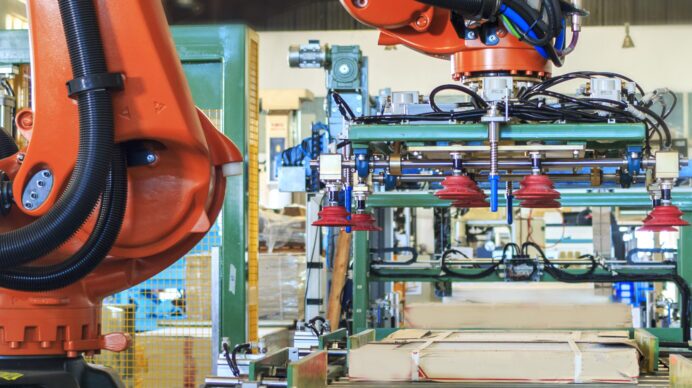
Technology can help automate the standard flow while giving operators a clear path when something doesn’t match expectations.
2. Contain the Problem
Once an exception is identified, the next objective is to prevent it from spreading. That could mean placing inventory on hold, quarantining nonconforming product, stopping an order, separating affected units, or preventing an incorrect shipment from leaving the facility.
DCL’s quality practices include designated quarantine and nonconformance areas for isolating noncompliant materials and preventing them from being inadvertently used.
3. Investigate and Resolve
The team then determines what happened and what needs to happen next. Depending on the issue, that may involve:
- Reviewing receiving records
- Checking inventory transactions
- Inspecting product
- Reviewing order instructions
- Confirming customer requirements
- Checking documentation
- Coordinating with the brand, supplier, carrier, or retailer
The objective is a fast resolution without sacrificing accuracy.
4. Document the Exception
Documentation is critical because an exception that isn’t recorded becomes difficult to analyze. The warehouse should capture enough information to understand:
- What happened
- When it happened
- Which SKU, order, lot, or shipment was affected
- How it was resolved
- Who was involved
- Whether additional corrective action is required
5. Find the Root Cause
This is where mature 3PL operations differentiate themselves. If the same type of exception happens repeatedly, fixing each individual occurrence isn’t enough. Root cause analysis asks why the process failed in the first place.
- Was the SOP unclear?
- Was training incomplete?
- Was a supplier repeatedly sending incorrect ASNs?
- Was the packaging configuration wrong?
- Was a system rule missing?
- Was the process relying too heavily on manual work?
The answer should drive the corrective action.
6. Prevent Recurrence
The final step is turning the lesson into a process improvement. DCL’s quality framework includes documented SOPs and work instructions, change control and deviation management, nonconformance and CAPA processes, internal audits, training and competency programs, and performance monitoring.
That creates a feedback loop: Exception → Investigation → Root Cause → Corrective Action → Process Improvement → Monitoring
That’s what turns exception management into continuous improvement.
Automation Shouldn't Mean Rigidity
Automation is extremely valuable in fulfillment. It helps warehouses process high volumes consistently, reduces manual touches, and creates repeatability.
But automation designed only for the 80% of ordinary orders can become a liability when an order doesn’t conform to the expected workflow.
The best fulfillment technology does two things simultaneously:
- Automates the standard.
- Makes exceptions easier to manage.
For example, DCL’s eFactory platform provides customers with visibility into order, inventory, and RMA statuses, along with reporting and analytics for areas such as inventory forecasting and shipping optimization. It also provides visibility into receiving, shipping, tracking, and inventory management.
That visibility matters because exception management gets harder when brands can’t see what’s happening inside the warehouse. The objective isn’t to automate every decision, it’s to give the people making decisions better information.
Peak Season Is an Exception-Management Problem, Too
Peak season changes the operating environment: more orders, more receipts, more returns, more retailer activity, more transportation pressure, and less room for recovery when something goes wrong. It’s also a season that requires fast pivots when things aren’t going as expected: like when demand out paces your forecast.
A strong 3PL plans for exceptions before peak arrives. That means forecasting expected volumes, reviewing inventory requirements, identifying labor needs, testing workflows, reviewing known retailer requirements, and establishing clear operational ownership.
Succeeding during peak means having enough capacity, visibility, process discipline, and, most importantly, flexibility to absorb variability.
How to Spot Exception Trends Before They Become Problems
One of the biggest opportunities in exception management is moving from reactive to proactive. Instead of waiting for a customer to ask, “Where is my order?”, operations teams should be looking for signals that something upstream is deteriorating.
KPIs Worth Watching
Beyond standard on-time shipping metrics, brands and 3PLs should monitor:
Receiving
- Dock-to-stock time
- Receiving discrepancy rate
- ASN accuracy
- Percentage of receipts requiring manual intervention
- Inventory put-away time
Inventory
- Inventory accuracy
- Cycle-count variance
- Inventory adjustments
- Inventory on hold
- Shrinkage
- Lot or expiration discrepancies
Fulfillment
- Order exception rate
- Pick/pack error rate
- Orders requiring manual intervention
- Same-day fulfillment performance
- Backlog by age
Returns
- Return processing time
- Return discrepancy rate
- Percentage of returns requiring inspection or refurbishment
- Restock rate
Customer and Retail
- Retail compliance issues
- Chargebacks
- Customer-service contacts related to fulfillment
- Reshipments
- Cancellations caused by fulfillment delays
The important metric isn’t necessarily the absolute number, it’s following the trend.
If receiving discrepancies increase for three consecutive weeks, that may be more important than a single bad receiving day.
If a particular SKU generates an unusually high number of pick exceptions, the problem may be the SKU setup, packaging, location, labeling, or workflow, not the individual warehouse employee.
Exception Management Gets More Important as Brands Grow
Complexity tends to increase alongside growth. A brand may start with a handful of SKUs and DTC orders. Then it adds retail accounts, Amazon, bundles, special kitting or custom packaging, subscription orders, and more.
Each new channel introduces new rules, each new variation adds complexity. That means the fulfillment operation has to manage not just more orders, but more types of orders.
DCL supports DTC, B2B, retail, Amazon, and marketplace fulfillment, as well as kitting, assembly, relabeling, reboxing, testing, and other postponement services. The operational advantage is having one partner capable of managing that complexity rather than creating a patchwork of processes and providers.
Quality Processes Make Exception Management Scalable
There is a temptation to think of exception management as something that depends primarily on experienced warehouse employees.
While experience matters, it’s not what enables a fulfillment operation to scale. When experienced operational knowledge meets quality repeatable systems, that’s the path to true growth and stability.
Your 3PL should be able to share the following with you in detail:
- Documented SOPs and work instructions
- Clear escalation paths
- Quality checks
- Quarantine procedures
- Traceability
- Change control
- Root cause analysis
- CAPA
- Internal audits
- Performance monitoring
DCL’s quality management practices incorporate all of these layers, including product traceability through lot and serial number tracking and documented procedures for recalls and customer-initiated quality changes. This is particularly important for products where traceability and inventory control are critical. DCL also supports lot and expiration-date tracking and can configure inventory to ship according to customer requirements such as FEFO, FIFO, or LEFO.
What the Best 3PLs Do Differently
The best 3PLs don’t pretend exceptions won’t happen, they build systems to ensure they are as much of a focus as the regular orders.
A modern 3PL should employ technology that handles both the median and the exceptions. This means automation should be standardized but also flexible to ensure workflows for orders and inventory that require intervention are met quickly.
Quality should be a core function of the warehouse, not just a check box. Quality should be embedded throughout receiving, storage, fulfillment, and returns.
One aspect of exception management that is increasingly important to high-growth brands is enhanced visibility. Brands shouldn’t have to send an email every time they want to know what’s happening with inventory or an order. Real-time or near-real-time visibility into operational data allows teams to identify and address issues earlier.
The goal with fulfillment isn’t zero exceptions, it is fast and intelligent recovery. No warehouse is going to operate without exceptions.
The difference between a high-growth brand and a stagnant one is often a fulfillment operation that is resilient in its ability to change with the market needs.
The strongest operations will do more than fix an issue, they will create a feedback loop to understand why it occurred, change the process, and monitor the result. This distinction becomes increasingly important as brands scale. The more products, channels, retailers, customers, and fulfillment requirements a business adds, the more opportunities there are for something to fall outside the standard workflow.
Frequently Asked Questions About Warehouse Exception Management
Warehouse exception management is the process of identifying, containing, resolving, documenting, and preventing issues that fall outside a warehouse’s standard operating procedures. Common examples include damaged inventory, receiving discrepancies, incorrect ASNs, short shipments, overages, missing documentation, inventory variances, and fulfillment errors.
Common warehouse exceptions include damaged pallets, incorrect or missing ASNs, unlabeled inventory, inventory shortages and overages, missing paperwork, product discrepancies, picking and packing errors, shipping issues, and returns that require additional inspection or processing.
A 3PL can reduce exceptions by combining warehouse automation with flexible workflows, quality controls, employee training, inventory accuracy programs, documented SOPs, proactive peak planning, root cause analysis, and corrective and preventive actions. The goal is not just to resolve individual problems but to identify and eliminate recurring causes.
Root cause analysis helps determine why an exception occurred rather than simply correcting its immediate symptom. If the same receiving, inventory, or fulfillment issue happens repeatedly, identifying the underlying cause allows a 3PL to change the process and prevent future occurrences.
Warehouse technology provides visibility into inventory, orders, receiving, shipping, returns, and operational status. It can automate standard workflows while flagging transactions that require human intervention. This gives warehouse teams the information they need to resolve exceptions faster and helps brands identify trends before they become larger operational problems.
This post was written by Maureen Walsh, Marketing Director at DCL Logistics. A writer and blogging specialist for 20 years, she helps create quality resources for ecommerce brands looking to optimize their business.
Tags: Warehouse Management