




Recharge manages the subscription relationship: recurring billing, subscriber preferences, skip and swap logic, and product selection per cycle. A 3PL manages the physical fulfillment: kitting, assembly, shipping, and returns. This guide explains how data moves between Recharge, Shopify, and a fulfillment provider and what subscription brands should confirm before connecting.
9-minute read
A Recharge 3PL integration defines how subscription order data reaches a third-party logistics provider’s fulfillment systems. The connection is typically indirect: Recharge processes the subscription charge, creates an order in Shopify, and the 3PL receives that Shopify order through its Shopify integration. There is no native Recharge-to-3PL connection in most implementations.
Subscription fulfillment is operationally different from standard DTC. Box contents may change between cycles, kitting and assembly add labor to every order, and a late or inaccurate shipment directly drives subscriber churn. The integration needs to account for these patterns or the 3PL will treat subscription orders like individual purchases and miss the requirements that make them distinct.
This guide is for subscription brands running Recharge (typically on Shopify) that are evaluating a 3PL, especially those where kitting complexity or subscriber count is outpacing in-house fulfillment capacity.
Contents
- Recharge’s Role in Subscription Commerce
- When Subscription Brands Need a 3PL
- What Makes Subscription Fulfillment Different
- How the Integration Works
- What to Confirm Before Connecting
- Why DCL Is Built for Recharge 3PL Integration
- Frequently Asked Questions
Recharge’s Role in Subscription Commerce
Recharge is a subscription management platform that handles recurring billing, subscriber lifecycle management, and product selection logic for ecommerce brands. It typically runs on top of Shopify, using Shopify as the storefront and checkout layer while Recharge manages the subscription rules.
Recharge controls when subscribers are billed, which products are included in each cycle, and how customers interact with their subscriptions through skip, swap, pause, and cancellation options. When a charge processes successfully, Recharge creates an order in Shopify that represents that cycle’s fulfillment request.
Recharge does not manage warehouse operations, physical inventory, kitting assembly, carrier selection, or shipping execution. A brand still needs a fulfillment operation to receive those orders and turn them into packed, labeled, shipped boxes. As the subscriber base grows and box configurations become more complex, the physical fulfillment becomes the bottleneck.
When Subscription Brands Need a 3PL
Subscription brands face a different scaling curve than standard DTC operations. The labor per order is often higher because subscription boxes typically involve kitting and assembly rather than single-item picks. That labor intensity makes in-house fulfillment harder to scale as the subscriber base grows.
Warning signs include kitting taking longer each cycle as box complexity grows, fulfillment staff unable to complete shipments before the promised date, inconsistent assembly quality across boxes, and inventory shortfalls discovered mid-cycle because allocation was not planned against subscriber counts.
The stakes for subscription fulfillment are higher than for one-time orders. A customer who receives a late or inaccurate subscription box is more likely to cancel than a customer who has a single bad DTC experience. Subscriber retention is directly tied to fulfillment consistency, which makes operational reliability a growth lever rather than a cost center.
Channel expansion compounds the challenge. A subscription brand that also sells individual products through Shopify, Amazon, or wholesale needs to allocate shared inventory between predictable subscription demand and variable one-time demand. Without a system that manages both, one channel will eventually oversell the other.
What Makes Subscription Fulfillment Different
Standard ecommerce fulfillment treats each order as an independent event. Subscription fulfillment introduces recurring cycles, variable box contents, and kitting labor that change how the integration and the warehouse need to operate.
Some subscription programs process charges and ship in defined batch cycles (all subscribers renew on the same date). Others bill and ship continuously based on each subscriber’s individual renewal date. The integration and warehouse workflow need to support whichever model the brand uses, and some brands run both patterns simultaneously across different subscription tiers.
The table below maps each phase of the subscription fulfillment cycle to the system that typically owns it.
| Phase | Recharge | Shopify | 3PL |
|---|---|---|---|
| Recurring billing | Owner | Receives order | Receives order |
| Skip, swap, pause, cancel | Owner | Reflects changes | Receives updated order |
| Product selection per cycle | Owner | Passes to order | Receives as line items |
| Kitting and assembly execution | Not involved | Not involved | Owner (from brand-defined BOMs) |
| Pick, pack, and ship | Not involved | Receives confirmation | Owner |
| Carrier selection | Not involved | Not involved | Owner |
| Tracking updates | Not involved | Displays to customer | Owner (generates data) |
| Inventory allocation | Not involved | Displays counts | Owner (physical counts) |
| Returns and replacements | May initiate | Reflects status | Owner (receives, inspects) |
The key takeaway is that the 3PL executes the physical work, but the assembly and packaging rules that govern that work are defined by the brand, not by Recharge. Recharge supplies products and quantities through order line items. The bill of materials, assembly instructions, packaging specifications, and work orders typically live with the brand, an OMS, or the 3PL’s system.
How the Integration Works
Recharge typically operates through Shopify, which means the integration path for most brands is Recharge to Shopify to the 3PL. Recharge processes the charge and creates a Shopify order; the 3PL’s Shopify integration picks up that order for fulfillment. The brand, Recharge, and the provider need to coordinate timing so subscription orders reach the warehouse with enough lead time for kitting and shipping.
Subscription Order Flow
When Recharge processes a charge, it creates an order in Shopify for each subscriber whose payment succeeds. The 3PL receives those Shopify orders through the same integration it uses for regular storefront orders. The provider’s system should be able to identify subscription orders and route them to the appropriate fulfillment workflow, whether that means a dedicated kitting queue or a standard pick-and-pack process.
Subscriber changes made before billing (skips, swaps, product changes, cancellations) update the Recharge subscription before the charge processes, so the Shopify order the 3PL receives already reflects the subscriber’s current selections. Changes made after billing but before the warehouse begins fulfillment need a defined exception path.
The brand should establish a clear cutoff window for each cycle. After that cutoff, subscriber changes no longer affect the current shipment. Without a defined cutoff, the warehouse risks starting assembly on instructions that are still changing, which creates rework, waste, and delays.
Kitting and Assembly
Subscription boxes typically require kitting: the warehouse assembles multiple components into a single package according to defined rules. Recharge passes the products and quantities for each order as line items. The bill of materials, assembly instructions, packaging specifications, and insert rules are maintained separately by the brand, an OMS, or the 3PL’s own system.
For fixed-box subscriptions, the BOM stays the same across subscribers within a tier and changes only when the brand updates it between cycles. For variable or build-your-own boxes, each subscriber’s order may contain a different combination of products, and the 3PL’s system must support that order-level variability without manual intervention on every box.
When the BOM changes between cycles (new featured product, seasonal rotation, updated inserts), the brand must update the configuration and confirm the warehouse has received the change before the fulfillment run begins. A service-level agreement should define how far in advance BOM changes must be submitted and confirmed.
Inventory Planning for Recurring Demand
Subscription brands have a forecasting advantage that most DTC brands do not: active subscriber counts provide a predictable baseline for inventory planning. If 5,000 subscribers are scheduled to renew next month and each box contains three items, the brand knows it needs at least 15,000 units of those components on hand.
The challenge is that subscription inventory shares a pool with one-time DTC orders, marketplace sales, and potentially wholesale demand. Without explicit allocation, a surge in DTC orders can consume units needed for the next subscription cycle, forcing the brand to delay shipments or substitute products.
Ideally, the 3PL’s system would reflect both committed inventory (units reserved for upcoming subscription runs) and available-to-sell inventory (units open for one-time orders). Not every 3PL platform supports this distinction natively, so brands should confirm whether the provider’s system can separate inventory already reserved for subscriptions from stock available to other channels.
Brands should also plan safety stock for subscription components separately from general DTC inventory. Seasonal subscription cycles, promotional gift subscriptions, and expected churn-driven reactivation campaigns all affect how much buffer stock the warehouse needs.
What to Confirm Before Connecting
Before launching a Recharge 3PL integration, brands should work through the following checklist with the provider. Each item should have a documented answer and a named owner before the first subscription cycle ships.
- Order path and timing. Confirm how Recharge orders flow through Shopify to the 3PL, how quickly the transfer occurs, and whether the provider’s system can distinguish subscription orders from one-time purchases.
- Subscriber change cutoff. Define the window after which skips, swaps, and cancellations no longer affect the current cycle. Both the brand’s customer-facing communication and the provider’s fulfillment schedule should reflect this cutoff.
- BOM and kitting instruction delivery. Confirm how the brand communicates assembly rules, how far in advance changes must be submitted, and how the warehouse acknowledges receipt of updated BOMs.
- Variable box support. If subscribers choose from options, confirm that the provider’s system can handle order-level variability without manual work orders for each box.
- Inventory reservation. Confirm whether the provider’s system can reserve inventory for upcoming subscription cycles and display the distinction between committed and available-to-sell stock.
- Billing cycle model. Confirm whether the warehouse workflow supports the brand’s billing pattern (batch, rolling, or both) and how fulfillment staging differs for each.
- Returns and replacements. Define where customers initiate returns, how the warehouse receives and inspects subscription products, when inventory re-enters the available pool, and how replacement boxes are triggered.
- Failed charges and partial cycles. Confirm how the integration handles orders for subscribers whose payment fails mid-cycle and whether partially paid cycles produce fulfillment requests.
- Full-cycle testing. Test across at least one complete subscription cycle: charge processing, order creation in Shopify, transfer to the 3PL, kitting, shipping, tracking updates, and returns. Include edge cases such as last-minute swaps, tight inventory, and mixed subscription tiers.
- Monitoring and ownership. The onboarding plan should assign named owners on both the brand and provider side for monitoring during the first two to three production cycles.
Why DCL Is Built for Recharge 3PL Integration
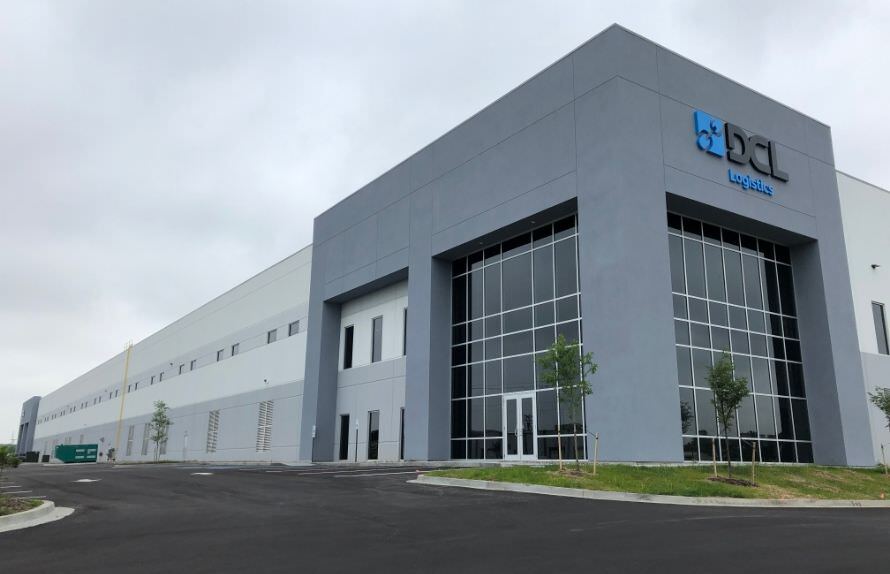
DCL Logistics supports Recharge through its native Shopify integration and handles the kitting and assembly work that subscription fulfillment requires through dedicated value-added services teams. The eFactory platform, DCL’s proprietary system combining OMS, TMS, EDI, and client portal, gives clients live inventory counts, order status by channel, and shipment tracking across all facilities through one client portal.
SelectShip, DCL’s dynamic carrier and service optimization engine, evaluates origin, weight, and channel service requirements at dispatch across both parcel and retail/B2B shipping. DCL Logistics reports order accuracy above 99.8%, on-time shipping above 98.5%, inventory accuracy above 99.5% on monthly cycle counts, and shipping cost savings of 10–15% compared with independent carrier management.
DCL’s facility network covers the United States from locations in Fremont, CA; Ontario, CA; Perris, CA; Louisville, KY (adjacent to UPS Worldport); and York, PA.
Talk to DCL about Recharge 3PL integration →