


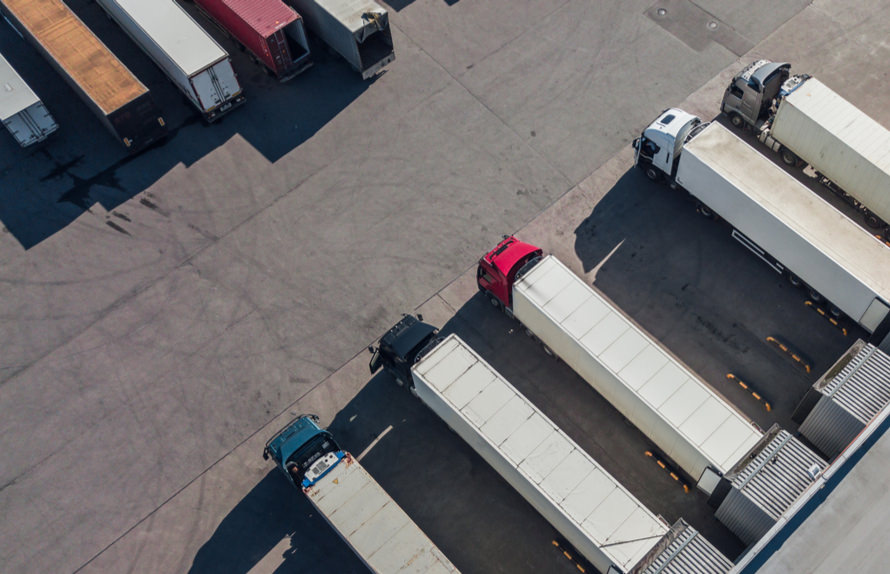


In ecommerce warehousing, pallets are essential for storage, handling, and shipping. Choosing the right pallet type ensures operational efficiency, product safety, and compliance with retailer and international requirements.
Using the wrong pallet can lead to damaged goods, rejected shipments, and costly delays.
If you are a brand working with a 3PL to manage your inventory, fulfillment and shipping you’ll want to ensure they optimize their warehouse with the correct types of pallets to send your shipments to the channels you need.

Paying Too Much for Shipping?
Learn how Willow saved 50% on shipping and labor costs by reformatting their packaging and kitting.

Different Types of Pallets
Standard Pallets (Grade B)
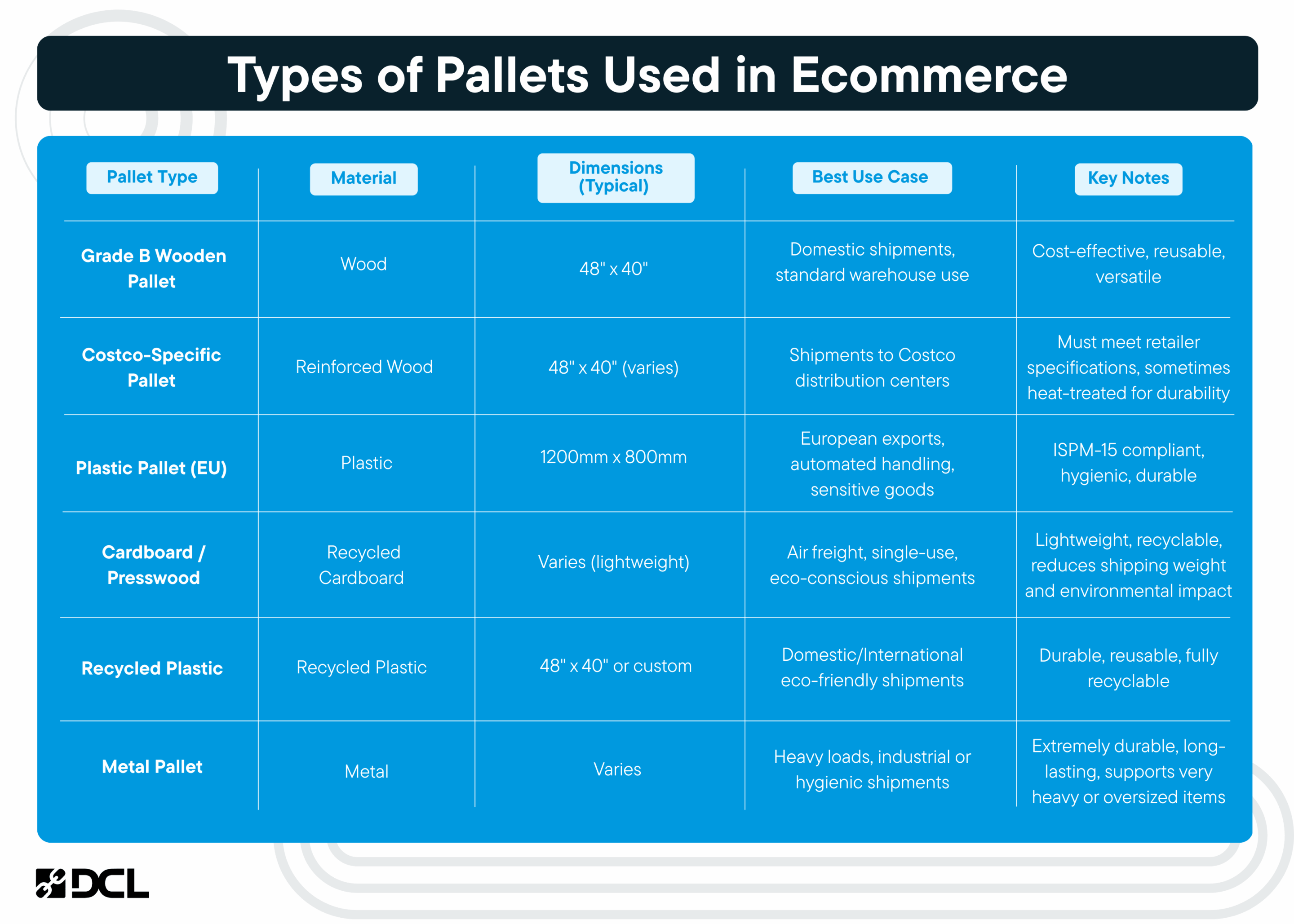
The most common pallet type in ecommerce shipping and warehousing is the Grade B wooden pallet. These pallets are typically 48″ x 40″, sturdy enough for multiple uses, and compatible with forklifts, pallet jacks, and racking systems.
Grade B pallets provide a balance of durability and cost-effectiveness, making them ideal for domestic shipping and storage of standard-sized boxes and goods. They are often used for bulk orders or mixed-product shipments where uniformity is important but extreme durability is not required.
Costco-Specific Pallets
Certain retailers, such as Costco, require specific pallet types. Costco-approved pallets are generally reinforced wooden pallets, often heat-treated for durability and safety.
Ecommerce sellers shipping to Costco distribution centers must follow these specifications to prevent shipment rejection and maintain smooth supply chain operations.
European Shipments and Plastic Pallets
For international shipments to Europe, plastic pallets are typically required. These pallets comply with ISPM-15 regulations without additional treatment, are highly durable, hygienic, and compatible with automated handling systems. Standard European dimensions, such as 1200mm x 800mm, are optimized for logistics networks across the continent.
Plastic pallets are especially important for sensitive products such as food, beverages, or pharmaceuticals, where sanitation and durability are critical.
Eco-Friendly, Cardboard Pallets, and Alternative Materials
Sustainability is increasingly important in ecommerce logistics. Pallets made of recycled plastic, cardboard, or sustainably sourced wood help reduce environmental impact.
Plastic pallets, while costlier upfront, are long-lasting and fully recyclable, making them a smart investment for recurring shipments. Cardboard or presswood pallets, being lightweight and recyclable, are ideal for air freight or single-use shipments where weight reduction and sustainability are priorities.
Alternative Types of Pallets and Other Names for Pallets
Ecommerce warehouses use various kinds of pallets depending on load, handling, and shipping requirements. A solid deck pallet features a continuous top surface for extra stability, while double-face pallets have deck boards on both the top and bottom for improved strength and durability. Wooden block or block pallets use solid blocks instead of stringers, allowing for four-way forklift entry and greater load support.
The GMA pallet, standard in the US, is widely used for domestic shipments and fits common pallet racking systems. For international shipments, the Europallet (or EPAL pallet) is standard in Europe, designed for precise dimensions and regulatory compliance. Specialty pallets include metal pallets for heavy-duty or hygienic applications and wing pallets, which feature extended deck boards to support overhanging loads.
Understanding the different names and types of pallets helps warehouse operators choose the right platform for storage, handling, and shipping, ensuring efficiency and product safety.
When Material Choice Matters
- Grade B Wood Pallets: Cost-effective, versatile, ideal for domestic shipping and standard warehouse use.
- Plastic Pallets: Durable, hygienic, ISPM-15 compliant; essential for European exports and automated systems.
- Cardboard/Presswood Pallets: Lightweight, recyclable; ideal for air shipments or eco-conscious operations.
- Metal Pallets: Extremely strong and durable; ideal for very heavy loads, long-term reuse, and hygienic or industrial shipments where sanitation and longevity are critical.
Why Choosing the Right Pallet Matters
Selecting the correct pallet type ensures:
- Compliance with retailer and international regulations
- Operational efficiency through compatibility with warehouse equipment and automated systems
- Cost savings by reducing damage, delays, and returns
- Sustainability alignment through eco-friendly material use
In ecommerce warehouses, pallets are more than storage platforms—they are critical tools for safe, efficient, and compliant operations. Choosing the right type ensures smooth fulfillment, proper handling, and alignment with both domestic and international logistics requirements.

Looking for a Fulfillment Solution?
We love supporting trendsetting brands. Ask us about our customized fulfillment solutions, dedicated account manager support, and best-in-class order management platform.


