


Gina Ellison manages Partner Marketing initiatives at Skubana, the leading retail inventory and order management software for multichannel sellers and D2C brands looking to unify and automate their operations. When Gina is not marketing ecommerce software, she likes to spend time outdoors with her dog Elli.
Automation has rewritten the rules of global supply chain operations. To compete in the modern, digitized retail landscape, retailers and marketplace sellers need to optimize their workflows. This enables them to maintain a competitive advantage both domestically and in emerging economies where supply chain disruption is taking off.
Supply chain automation is a tool to do just that.
Automating supply chain processes reduces the manual effort required to run a business. It increases the productivity, accuracy, and efficiency of supply chain managers. Choosing the right tools and partners can also cut down on logistics costs, increase profitability, and protect your business with a resilient supply chain that can adapt to changing economic environments.
Track Customer Demand
Customer demand patterns are something your inventory management system should be tracking. Sales patterns are always changing and tracking demand manually is not an option. The right inventory and order management software will do this for you using real-time data to manage inventory levels alongside your current consumer demand aka incoming customer orders.
An effective inventory system will calculate average daily sales, lead time, inventory levels including safety stock and reorder points, and use historical data to adjust these numbers when sales start trending. It will ensure that products are available to meet customer demand and that excess inventory will never be a problem that affects your profits or increases your costs. Traditional supply chain models and legacy systems track this manually, often resulting in inaccurate data, and lost opportunity.
Find and Fix Weak Links in the Supply Chain
Automating your supply chain will help you find those areas that are slowing things down, that no longer work, or can be removed. Your supply chain can be nebulous. There are many steps involved in getting a product from your supplier to its final stop in a customer’s hands. Having a flexible supply chain allows you to maintain a competitive advantage, lower overall cost, and improve sourcing and procurement.
In a modern automated supply chain network, products and raw material are tracked from the time you create a purchase order with your key supplier until it is delivered to the customer’s door. Using the detailed data collected during this process, supply chain managers can identify aspects of your supply chain that need attention and are costing you the most money.
Streamline the Order Process
Your supply chain strategy should work like a well-oiled machine.
Products and raw material can be tagged with barcodes or RFID to prevent any manual errors. Next, they need to be tracked as they flow through your entire supply chain to ensure you know what you have and where it is.
And this information needs to be available to every part of your supply chain organization, so the right decisions can be made at each step of the journey. From product design, production and manufacturing, to your supply chain partner and logistics providers. An inventory system is only effective if it has the end-to-end order visibility that makes real-time supply chain flexibility possible. And a flexible supply chain efficiently keeps costs low and supply chain leaders happy.
Measure and Increase Performance
You don’t know where you are unless you know where you have been. Conversely, you do not understand where you have been unless you are tracking your progress. Keeping your eye on your key performance indicators will help you guide your business in the right direction.
With your warehouse KPIs in mind, you can set realistic goals and determine the steps that are needed to reach those goals. Without a roadmap to the future, wrong turns and uninformed decisions can eat away at profits and increase costs.
Warehouse Optimization
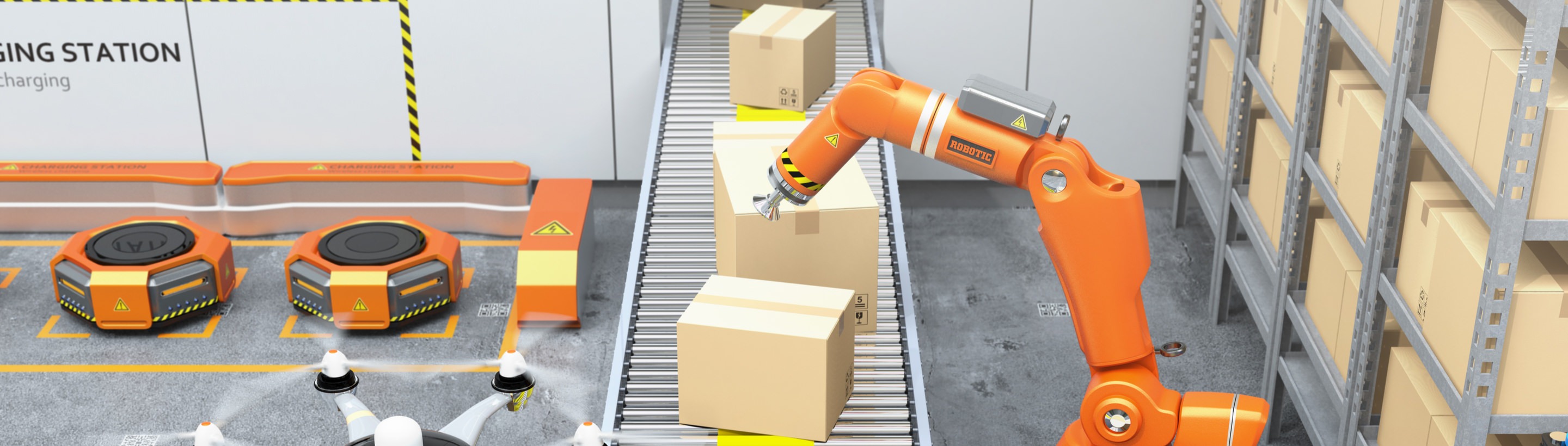
One of the top reasons a company automates its warehouse activities is to save space and lower costs. Warehouse optimization is a critical function of making your supply chain digital and flexible. Automated warehouses allow companies to store products higher and tighter. Automated lifts and carousels can store, retrieve, and relocate goods much more efficiently than human workers and require less space to do so.
Saving space also increases a company’s profitability.
Automating warehouse activities also eliminates human error from impacting the fulfillment part of your supply chain. Even the most advanced inventory system can lose track of your inventory if not monitored correctly. Products can be misplaced or picked incorrectly by a warehouse worker. Warehouse automation gives this job to your inventory system so it can be managed in real-time, keeping customers and warehouse staff happy.
Choose a Good 3PL Partner
Warehouse and transportation costs are some of the most expensive components of a modern supply chain. In the past, managing this internally may have been a necessary evil for an ecommerce business. But today, a retailer doesn’t need to own a warehouse to get products to consumers.
Outsourcing your supply chain management to a 3PL puts this work in the hands of supply chain professionals whose focus is on the supply chain performance, while your business focuses on selling products and generating demand. 3PLs have created global supply chain disruption giving everyone access to warehouse real estate at a fraction of the cost of traditional supply chain models.
An outsourced 3PL partner will give you:
- Resourcing flexibility
- Reduced costs
- Access to specialized equipment and technology
- Instant access to services and resources
The right 3PL partner contributes to your agile supply chain by lowering cost-of-goods sold, allowing you to create a more diverse portfolio, and increase profitability.
FAQ: How to Cut Supply Chain Costs Using Automation
Q: What is supply chain automation and why does it matter for ecommerce brands?
A: Supply chain automation is the use of software, hardware, and integrated systems to replace manual processes across the supply chain — from demand tracking and inventory management to warehouse operations and order routing. It matters because manual processes are slow, error-prone, and don’t scale. Automation increases accuracy, reduces labor costs, improves inventory visibility, and creates a more resilient supply chain that can adapt quickly to demand changes or disruptions without requiring proportional increases in headcount.
Q: How does automation help with demand tracking and inventory management?
A: An automated inventory system continuously tracks real-time sales data to calculate average daily sales velocity, adjust safety stock levels, and update reorder points dynamically as demand trends shift. Instead of manually reviewing spreadsheets and guessing when to reorder, the system triggers purchase orders automatically when stock hits predefined thresholds. This eliminates both stockouts (from under-ordering) and overstock (from over-ordering) — two of the most costly inventory management failures for ecommerce brands.
Q: How does warehouse automation reduce costs and improve fulfillment accuracy?
A: Automated warehouses use technology like RFID tagging, barcode scanning, automated storage and retrieval systems, and conveyor systems to store, locate, and move inventory with minimal human intervention. This allows products to be stored more densely (reducing warehouse footprint costs), retrieved faster (improving order throughput), and picked more accurately (eliminating the human errors that cause wrong shipments). Warehouse automation also removes the variability that comes with manual picking — accuracy rates of 99%+ are consistently achievable with well-implemented systems.
Q: What role does end-to-end supply chain visibility play in cost reduction?
A: End-to-end visibility means tracking every product from the moment a purchase order is created with a supplier through to delivery at the customer’s door. This real-time data allows supply chain managers to identify bottlenecks, inefficiencies, and cost drivers at each stage — and fix them before they compound. Without visibility, decisions are made on incomplete information, leading to reactive firefighting rather than proactive optimization. Measuring KPIs at each stage of the supply chain is what enables continuous improvement.
Q: How does outsourcing to a 3PL contribute to supply chain automation?
A: A 3PL with modern technology infrastructure gives brands instant access to automated warehouse systems, WMS software, carrier integrations, and inventory management tools that would cost six figures or more to build independently. When a 3PL integrates directly with your inventory and order management system, the entire supply chain from order receipt to shipment operates automatically — no manual handoffs, no data re-entry, no reconciliation delays. This lets the brand focus on demand generation and product development while the 3PL handles supply chain execution.
How DCL Automates Your Supply Chain
DCL functions as the automated supply chain infrastructure this article describes — without the six-figure investment of building it yourself. DCL’s eFactory platform integrates directly with your inventory and order management systems, automating the flow from order receipt to shipment with no manual handoffs. Barcode scanning at every warehouse touchpoint eliminates human error in receiving, picking, and shipping. Real-time inventory data syncs across all your sales channels continuously, triggering reorder alerts and updating available stock automatically. DCL’s SelectShip engine automates carrier selection per order. And DCL’s account managers provide the KPI reporting and supply chain analytics that help brands identify inefficiencies and make data-driven decisions. See how DCL’s technology automates your fulfillment →
Bottom Line
Automation has always been a way to cut costs in a business. It is not just a convenience. It is a necessity to survive in our modern digital world.
Putting an effective modern inventory system in place is a step in the right direction for building flexible supply chains and increasing its efficiency. Adding a 3PL partner that integrates with your inventory system will help you outsource your supply chain planning and management. When you give this work to the pros in automation and supply chain management, you’ll save money and have more time to focus on other important areas such as growth, demand, and sales.