



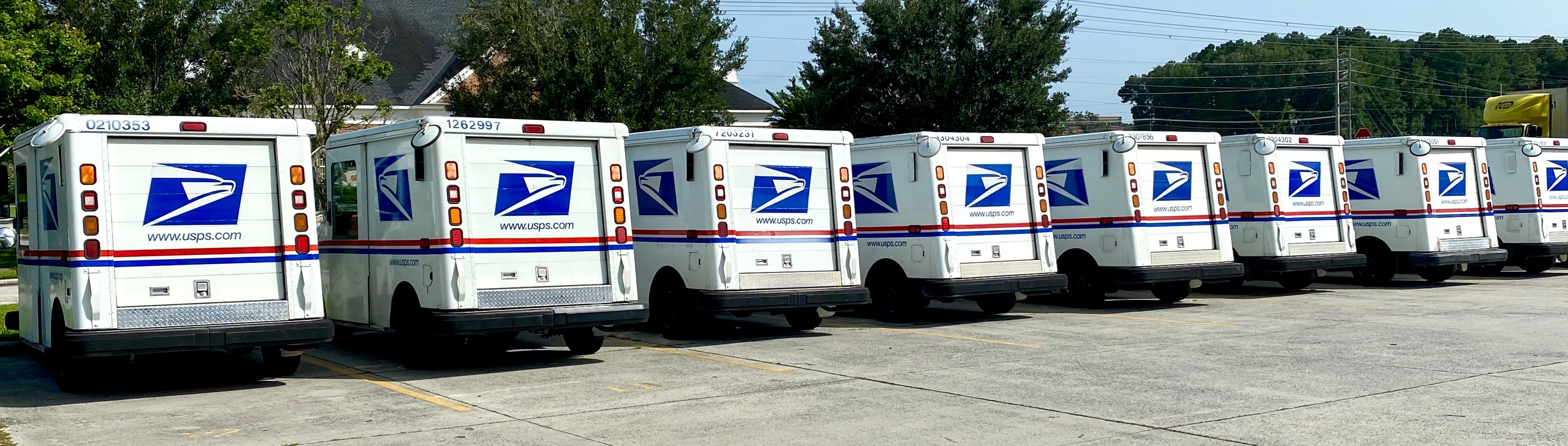
In a move that has sent ripples through the digital storefronts of America, the United States Postal Service (USPS) announced on March 25, 2026, that it will implement its first-ever 8% fuel surcharge on package deliveries. For ecommerce businesses already grappling with thin margins and rising operational costs, this “transportation-related time-limited price change” represents a significant shift in the competitive shipping landscape.
Pending approval by the Postal Regulatory Commission, the surcharge is set to go into effect on April 26, 2026, and is scheduled to run through January 17, 2027. While the USPS characterizes this as a “bridge” to a permanent pricing mechanism, the immediate reality for online sellers is a direct hit to the bottom line.
Why Ecommerce is the Epicenter
Unlike First-Class letters or Media Mail, which are exempt, the surcharge specifically targets “competitive products”—the very services that power the ecommerce engine:
-
USPS Ground Advantage: The go-to for lightweight, cost-effective shipping.
-
Priority Mail & Priority Mail Express: Essential for time-sensitive deliveries.
-
Parcel Select: The backbone of high-volume commercial shipping.
For a merchant shipping a 2 lb package via Ground Advantage, an 8% increase might seem like a few cents. However, when aggregated across thousands of orders, the financial impact is compounding. Furthermore, for those selling on marketplaces like eBay and Etsy, the pain is doubled: these platforms typically calculate their final value fees based on the total sale price, including shipping. When shipping costs go up, the platform fees follow suit, creating a de facto “tax on a tax.”
The 3PL Advantage: Turning Shipping into a Strategy
As shipping costs move from a “line item to tolerate” to a “lever to design,” many brands are turning to Third-Party Logistics (3PL) providers to insulate themselves from these spikes. In 2026, a 3PL does more than just pick and pack; it acts as a buffer against carrier volatility.
1. Volume-Aggregated Rate Power
The most immediate benefit of a 3PL is access to deeply discounted “Workshare” rates. Because 3PLs aggregate the volume of hundreds of brands, they can negotiate base rates that are significantly lower than what a mid-sized merchant could get on their own. Even with an 8% surcharge applied, the net cost per package often remains lower through a 3PL’s negotiated contract than a merchant’s direct Commercial Plus pricing.
2. Zone Skipping and Distributed Fulfillment
The fuel surcharge is a distance tax. The further a package travels, the more fuel it consumes, and the higher the base price the 8% is calculated against. A 3PL with a multi-node network (e.g., warehouses in Pennsylvania, Texas, and California) can place your inventory closer to your customers.
-
The Result: By converting a Zone 8 shipment into a Zone 2 shipment, you drastically lower the base cost, which in turn minimizes the dollar amount of the 8% surcharge.
3. Real-Time Carrier Orchestration
Modern 3PLs use rate shopping software that doesn’t just look at base prices. In light of the new USPS surcharge, 3PL systems can automatically re-route specific shipments to regional carriers (like OnTrac or Veho) or even UPS/FedEx if their specific daily spot rates or existing surcharges happen to be more favorable for a particular ZIP code that day.
Strategic Responses for Online Sellers
With the April 26 implementation approaching, ecommerce managers must act quickly.
-
Audit Your Free Shipping Thresholds: If your “Free Shipping over $50” model was built on 2025 margins, it is likely obsolete. Consider raising thresholds to $65 or $75.
-
Shift to “Cubic” Pricing: For high-density items, USPS Priority Mail Cubic remains a powerful tool. Because it bills on dimensions rather than weight, it can help offset the surcharge for heavy but compact goods.
-
Review DIM Weight Rules: Ensure your packaging is as small as possible. Since the 8% is a percentage of the total base rate, any air you ship (which triggers higher dimensional weight pricing) effectively makes the fuel surcharge more expensive.
Bottom Line: A New Era for the Post Office
Postmaster General David Steiner has been candid: this is not just about fuel. The USPS is facing a cash crisis and expects to be insolvent by February 2027 without significant structural changes. This 8% surcharge is a signal that the era of stable, surcharge-free postal shipping is over.
Ecommerce businesses should treat this not as a temporary blip, but as the first step in a new market-aligned USPS strategy. Success in this environment requires moving away from static shipping policies and toward a dynamic, 3PL-supported approach that optimizes for every mile.